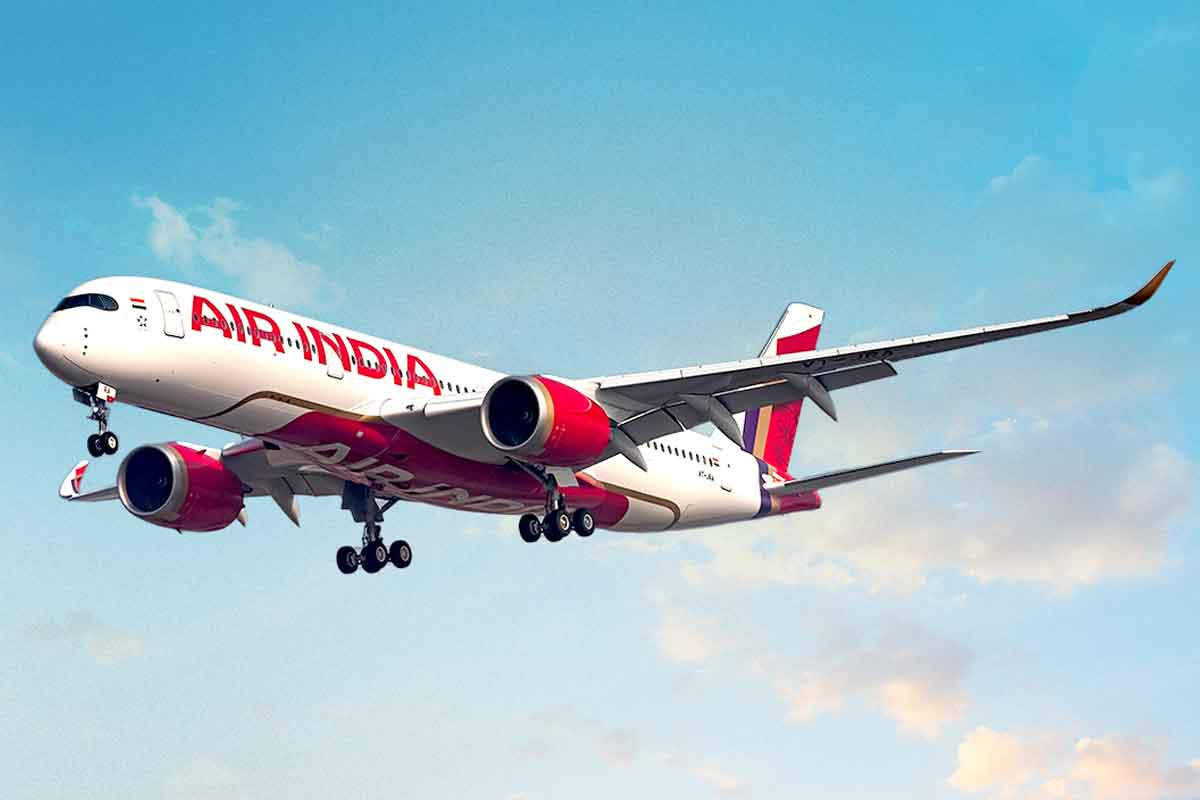
I was in a state of repose in my window seat, spotting Boeing 747s and Airbus A350s at Delhi's Indira Gandhi International Airport (DEL / VIDP), while our Air India aircraft stood idle, delayed due to a windshear warning issued by ATC. I knew about the intricacies of aviation safety, and how some rain and wind could barely pose a major threat to an aircraft, yet there we stood, waiting for the clouds to clear in order to pushback. It turns out that a windshear is a completely different ball game.
The skies often project an illusion of solitude. Passengers, ensconced in their seats, gaze through cabin windows at the horizon, imagining air travel as a system with meticulous procedure and inconceivable redundancies. Yet amid this tranquility, one of the greatest threats to air travel is simply nature itself- disguised in the air, hiding in plain sight, what is referred to as windshear.

By definition, windshear is a rapid change in wind speed and direction, or both across a short distance. This affects an aircraft's lift and airspeed. Mere turbulence could unfold into a life-threatening predicament if this occurs at low altitudes, that is, during takeoff or landing. A windshear can be horizontal or vertical, and can often lie undetected by weather reports and briefings. Unlike mechanical or geographical threats, windshear is often invisible and undetectable until its occurrence is imminent, giving pilots seconds to react in situations with low error margins. Takeoff and landing phases are especially susceptible.
Causes
Windshear is caused by the interaction of convoluted atmospheric factors, including convective activity, microbursts, and pressure-gradient induced airflow variation. A windshear is primarily experienced during thunderstorms. Mountainous terrain also disrupts airflow and causes windshear.
Impacts
Windshear can lead to a significant drop in aircraft performance. Loss of airspeed due to a sudden transition from headwind to tailwind can reduce lift. Reduced climb capability can lead to a stall. A minor windshear can disrupt an aircraft's glide path during landing procedure. It can also result in loss of control or runway excursions. Flights are delayed and sometimes cancelled if windshear is detected near the airport.
Pilot Procedures and Training
The best defence against windshear is preparedness and avoidance
- Pilots are trained to recognise weather cues, including rapid changes on radar and wind shifts on ATIS.
- They delay or reject approaches if windshear is likely.
- SOP specifies immediate escape actions.
- In practice, if a windshear occurs during takeoff or landing, pilots apply full thrust and pitch up to a safe climb altitude.
- The crews debrief each encounter thoroughly.
- Studies show that many windshear accidents have occurred on perfectly clear days during routine flights, so, continuous training in simulators is essential to induce the rapid response.
Case Studies of Windshear Crashes
On June 24, 1975, Eastern Airlines flight 66, operated by a Boeing 727 registered N8845E, encountered a severe microburst while approaching New York's John F. Kennedy International Airport. The aircraft rapidly lost altitude and crashed short of the runway, resulting in 113 fatalities. The accident became one of the earliest major investigations linking windshear to a commercial aviation disaster and catalysed further research into low-level windshear detection.
A decade later, on August 2, 1985, Delta Air Lines Flight 191, a Lockheed L-1011 TriStar, flew into a powerful microburst while approaching Dallas/Fort Worth International Airport. The aircraft first encountered a strong headwind, temporarily increasing lift, before entering the downdraft and subsequent tailwind region of the microburst. The resulting loss of airspeed and lift proved catastrophic, and the aircraft crashed short of the runway. The tragedy claimed 137 lives and fundamentally changed the aviation industry's approach to windshear training and detection.
These accidents proved that a perfectly serviceable aircraft, flown by a competent crew, can be placed in an almost impossible situation when confronted with severe low-altitude windshear.
Modern Technology and Detection Systems
Fortunately, aviation has not remained complacent. The lessons learned from these accidents have led to unprecedented advancements in weather detection.
Many major airports are equipped with Low-Level Windshear Alert Systems (LLWAS), which use a network of anemometers positioned around the airfield to detect sudden changes in wind speed and direction. Terminal Doppler Weather Radar (TDWR) systems also provide an additional layer of protection by identifying microbursts and outflows.
Onboard technology has also evolved considerably. Modern airliners utilise predictive windshear systems that analyse weather radar returns ahead of the aircraft and issue warnings before the aircraft enters dangerous conditions. Reactive systems monitor aircraft performance and alert crews if windshear is already being encountered.
The familiar "WINDSHEAR, WINDSHEAR" warning heard in simulator demonstrations is the culmination of decades of research and engineering.
Despite remarkable technological progress, windshear has not disappeared. Thunderstorms continue to develop, weather remains inherently inscrutable, and atmospheric conditions can still change faster than what forecasts can predict.
Modern detection systems have dramatically reduced the prevalence of fatal windshear accidents, yet pilots continue to report windshear encounters around the world every year. The difference today is that crews possess better information, superior training, and more sophisticated tools to manage the threat.
Conclusion
The next time a departure is delayed because of a windshear warning, the inconvenience may seem trivial. Yet those delays highlight one of aviation's greatest strengths: its willingness to put safety ahead of convenience
What I thought was a simple weather delay at Delhi Airport was, in reality, the result of decades of hard-earned lessons. Windshear may be invisible, but its consequences are anything but. It remains one of aviation's most precarious hazards; an atmospheric phenomenon capable of turning a routine takeoff or landing into a life-threatening predicament in no time.
The skies may seem peaceful from a cabin window, but beneath that facade lies a dynamic atmosphere that requires constant vigilance and scrutiny from everyone that contributes to an aircraft taking flight.


Comments
Post a Comment